Problem:
Bardet-Biedl syndrome (BBS) is a rare, genetic form of obesity who’s hallmark symptom is hyperphagia—a constant, overwhelming feeling of hunger. This unceasing preoccupation with food is due a disruption in the signaling pathway between the stomach and the brain. For these patients, their brain always believes it is hungry. In some cases, starving. This powerful compulsion for food disrupts every aspect of their lives; from sleepless nights filled with cravings, to social occasions and family relationships upended by their unrelenting hunger.
Solution:
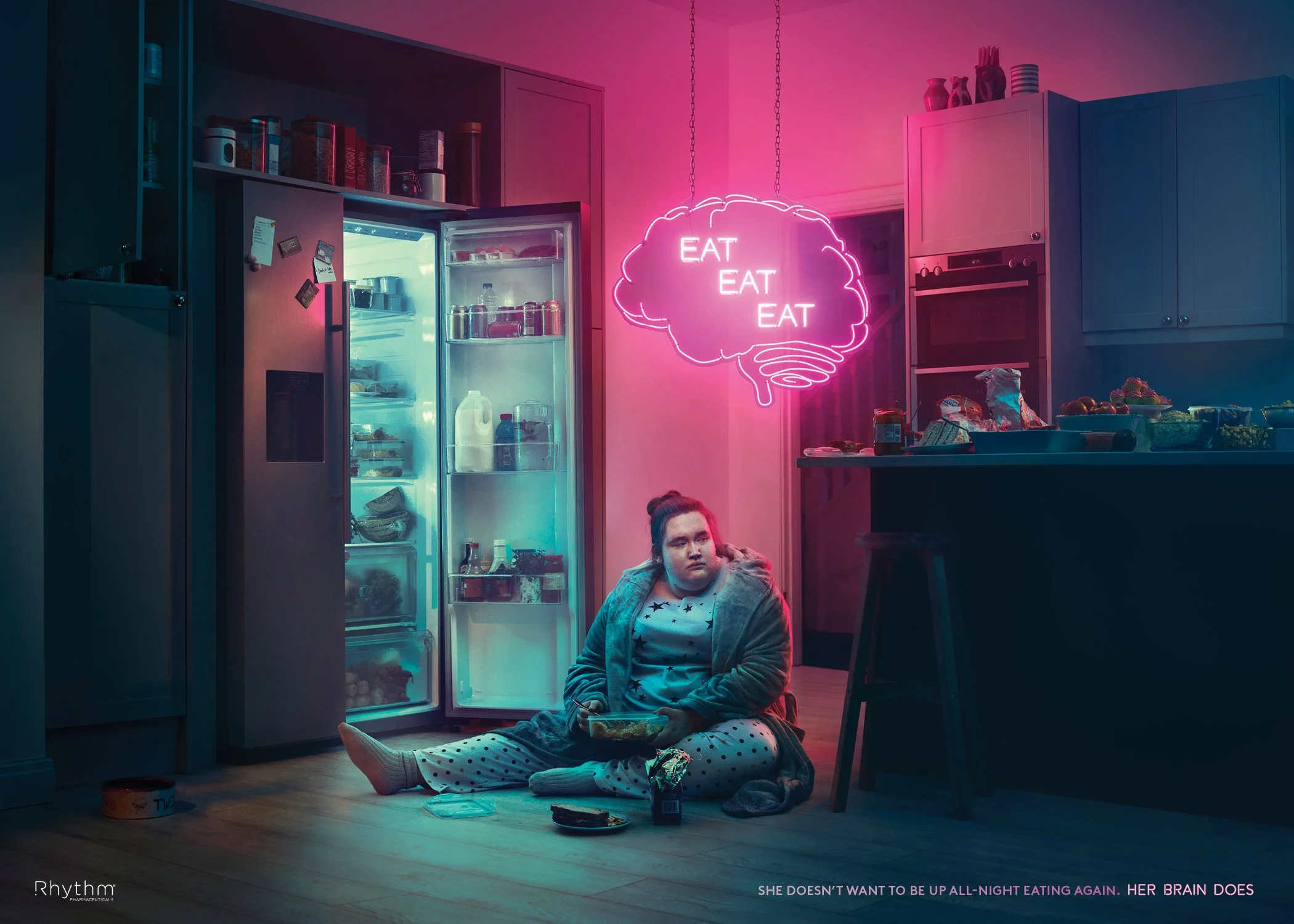
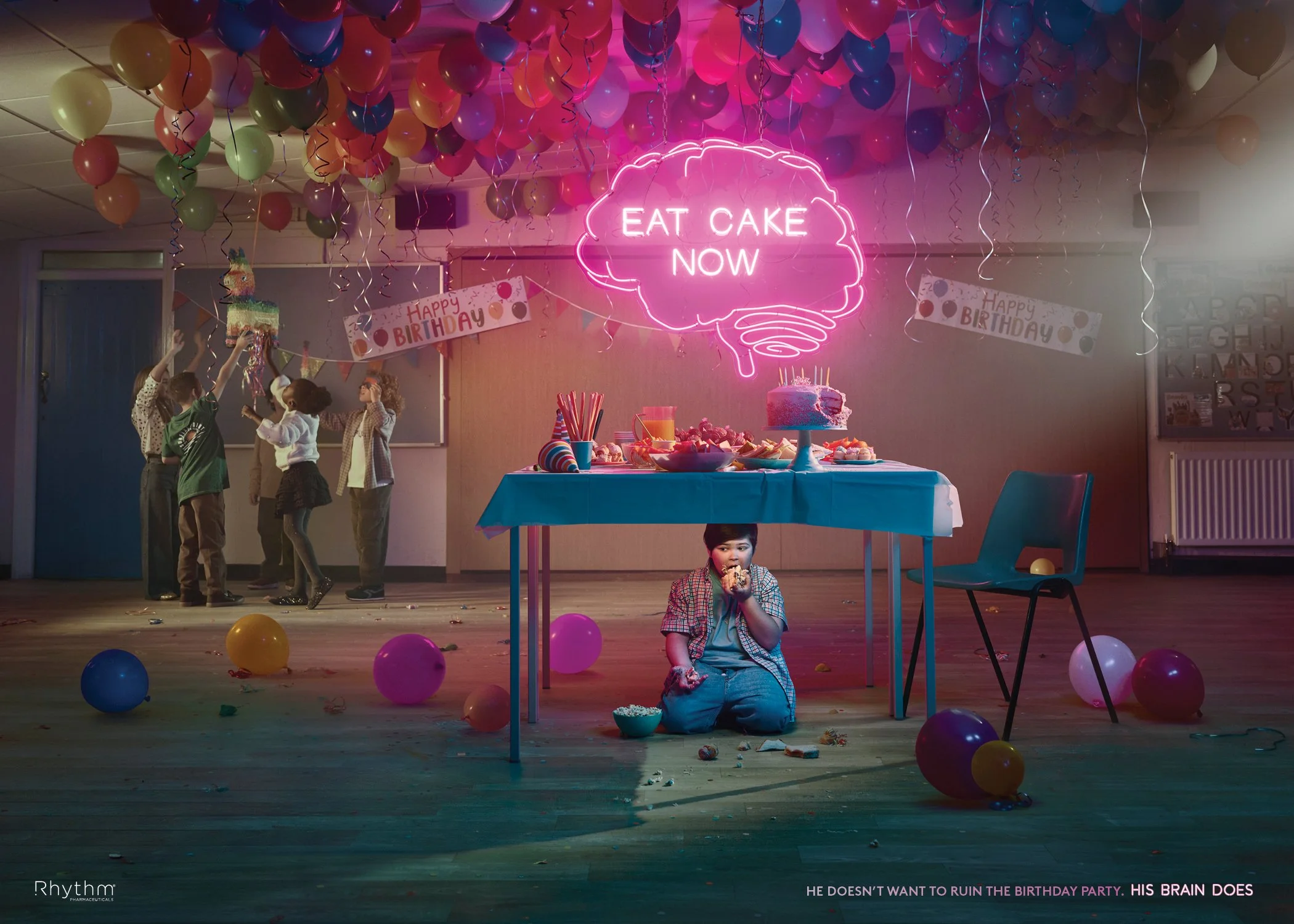
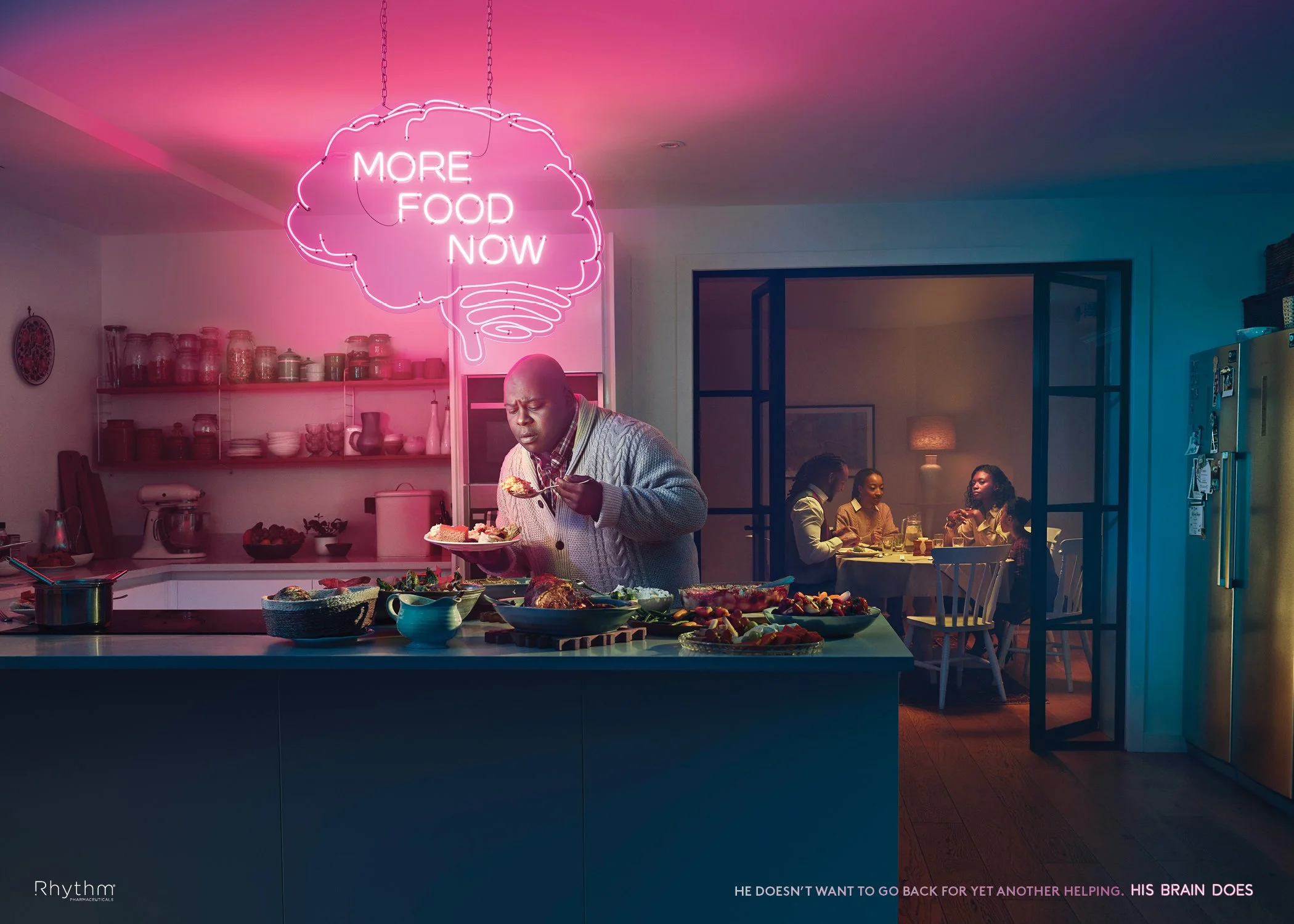
At its core, BBS is a conflict between a person and their brain. Patients don’t want to be constantly preoccupied with food and engaging in extreme food-seeking behaviors, but their brain is demanding they do exactly that.
We chose to depict this conflict by representing the aggressive, food driven impulses of the brain in the form of a neon sign which hangs over the patient, it’s message an eerie monotone instruction to engage in self-destructive food-based behavior the patients really don’t want to be doing.
Problem:
Bardet-Biedl syndrome (BBS) is a rare, genetic form of obesity who’s hallmark symptom is hyperphagia—a constant, overwhelming feeling of hunger. This unceasing preoccupation with food is due a disruption in the signaling pathway between the stomach and the brain. For these patients, their brain always believes it is hungry. In some cases, starving. This powerful compulsion for food disrupts every aspect of their lives; from sleepless nights filled with cravings, to social occasions and family relationships upended by their unrelenting hunger.
Solution:
At its core, BBS is a conflict between a person and their brain. Patients don’t want to be constantly preoccupied with food and engaging in extreme food-seeking behaviors, but their brain is demanding they do exactly that.
We chose to depict this conflict by representing the aggressive, food driven impulses of the brain in the form of a neon sign which hangs over the patient, it’s message an eerie monotone instruction to engage in self-destructive food-based behavior the patients really don’t want to be doing.